



It’s been barely a year since the Cincinnati Reds acquired Brady Singer in the trade that sent fan-favorite Jonathan India to the Kansas City Royals. Now, one of baseball’s top insiders is speculating the Reds could move Singer again. If true, Cincinnati may be facing another tough decision driven by payroll realities rather than competitive logic, of course, depending on the return.
Bookmark our Reds HUB to stay locked into/in the know of every Reds update.
Brady Singer’s Rising Price Tag
It’s a frustrating reality that Reds fans have grown used to: talented players become trade candidates not because of performance, but because of their salary. Brady Singer is projected to earn $12 million or more in his final year of arbitration, and that number alone may push Cincinnati to consider another move.
Singer’s value is obvious. He’s durable, capable, and reliably takes the ball 30+ times per season. A big-market team would gladly absorb a $12 million mid-rotation starter. The question is whether the Reds — who constantly operate under restrictive payroll limits — view that number as a reason to subtract, not build.
For what it’s worth, I wouldn’t trade him. If I were running the front office, this is the rare move they got right, and I’d be looking to extend him before letting him walk.
Should the Reds Trade Singer?
Let’s be clear: we’re not pushing a rumor for clicks. But if the Reds do explore a deal, the logic is straightforward. Cincinnati’s pitching depth should be strong enough to withstand the loss of a dependable No. 4 or No. 5 starter. Singer doesn’t miss many starts, and that durability is his biggest selling point in a league where starting pitching is at an all-time premium.
Still, if you’re trading durability, you better fill a real need.
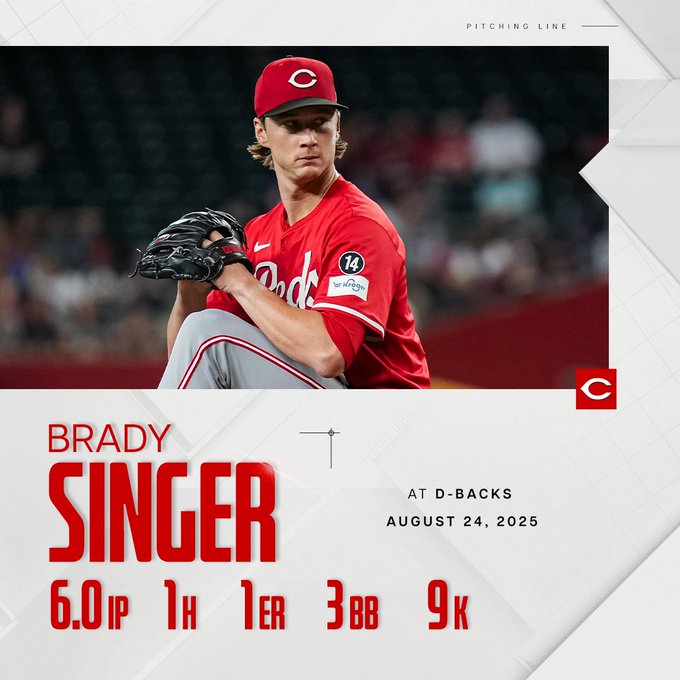
What Could the Reds Get Back?
If I’m the Reds GM, I’m approaching this from a dual perspective:
1. Get a big-league-ready player
2. Save money
Starting pitching has become the sport’s most valuable currency. Even a mid-rotation arm on a one-year, $12M deal has real trade leverage — especially for contenders, not cash-strapped, desperate for depth.
Here’s what I’d look for:
- A controllable late-inning reliever
- A near-MLB-ready prospect (only if they’re close)
- Potentially cash considerations to offset salary if an uneven trade
What I wouldn’t want?
A low-level prospect package. The Reds were a playoff team — they need to act like it and add pieces that help now.
If Singer truly becomes available again, he’ll draw interest, that’s for sure. The Reds just need to decide whether his cost, not his performance, is what drives their decision. After all, we do have significant holes in the offense, and the rotation is a strength, despite what anyone may say otherwise. We all know Hunter Greene is our biggest trade chip, but Singer is right there behind him.